

Virtual Assistant Skills That Drive Business Growth


Virtual assistant skills are the specific competencies, ranging from clear communication and time management to advanced automation and CRM management, that determine how much value a remote professional delivers to your business. The right skill set transforms a virtual assistant from a task executor into a genuine growth partner. Tools like Asana, HubSpot, and Zapier now appear in the majority of VA job listings, and the gap between a generalist and a specialist can mean the difference between $15 per hour and $100 per hour in market rates. If you want to hire smarter or develop your existing team, understanding these competencies is where you start.
1. What are the core virtual assistant skills every business needs?
The five foundational VA competencies are clear written communication, basic computer literacy, time management, attention to detail, and the ability to work without constant supervision. These baseline abilities qualify remote professionals for entry-level roles and form the backbone of every productive working relationship.
Clear written communication matters most. A VA who writes ambiguous emails or misreads instructions creates rework, delays, and frustration. Basic computer literacy covers tools like Google Workspace, Microsoft 365, and standard video conferencing platforms such as Zoom and Google Meet.
Written communication: Accurate, professional, and concise across email, chat, and documents
Time management: Meeting deadlines independently without reminders
Computer literacy: Proficiency in Google Workspace, Microsoft 365, and standard communication tools
Attention to detail: Catching errors before they reach clients or customers
Self-supervision: Delivering results without daily check-ins
Pro Tip: Before hiring, send a short written task as part of your screening process. A VA’s response quality tells you more about their communication skills than any resume.
These foundational abilities directly affect client trust. A VA who manages their own schedule and communicates clearly reduces your cognitive load from day one.

2. Which advanced technical skills elevate a VA’s value?
Project management tool proficiency in platforms like Asana, ClickUp, and Notion appears in over 70% of VA job listings as of mid-2026. That figure reflects how central these tools have become to distributed team operations. A VA who can build a project board, assign tasks, and track deadlines inside ClickUp saves you hours of coordination every week.
CRM expertise is equally critical. VAs with hands-on experience in HubSpot or Salesforce can manage your pipeline, log client interactions, and flag follow-up opportunities without being asked. Hiring VAs with combined CRM and domain knowledge reduces onboarding time and operational risk substantially.
Skill Area | Tools | Typical Rate |
Project management | Asana, ClickUp, Notion | $25–$40/hr |
CRM management | HubSpot, Salesforce | $30–$50/hr |
Automation and integrations | Zapier, Make.com | $50–$80+/hr |
Social media management | Buffer, Later, Meta Business Suite | $40–$65/hr |
Email marketing | Mailchimp, ActiveCampaign | $30–$45/hr |
Automation and AI workflow skills represent the fastest-growing demand category and the highest pay within VA roles. A VA who builds Zapier integrations or automates client onboarding sequences can deliver process efficiencies that compound over time.
Pro Tip: When evaluating technical candidates, ask them to walk you through a workflow they built in Zapier or Asana. Real examples reveal depth that certifications alone cannot.
Social media management and content creation command $40–$65 per hour on average. A VA who can schedule posts, write captions, and analyze performance data in Meta Business Suite or Buffer contributes directly to brand growth without requiring a full-time marketing hire.
3. What soft skills separate good VAs from great ones?
A 2024 Hubstaff survey found that employers prioritize self-management and initiative over specific technical skills when hiring virtual assistants. That finding is significant. It means a VA who takes ownership and communicates proactively will outperform a technically skilled one who waits to be told what to do.
The top soft skills that define high-performing remote professionals are:
Self-management: Organizing their own workload and meeting deadlines without prompting
Proactive communication: Sending updates before you ask, flagging problems early
Reliability: Consistent output quality across weeks and months, not just during onboarding
Adaptability: Adjusting to shifting priorities, new tools, or changing business needs
Emotional intelligence: Reading the tone of a situation and responding appropriately
The concept of “managing up” defines the best VA relationships. Proactive communication and problem anticipation reduce client cognitive load and build trust faster than any technical credential.
“Technical tool proficiency can be easily learned, but soft skills like reliability, communication, and initiative are harder to teach and more critical for long-term success.” — VirtualCrew, 2026
Adaptability deserves special attention. Business needs shift. A VA who can absorb a new tool, a new process, or a new priority without friction keeps your operations moving. Rigidity in a remote team member creates bottlenecks that cost you time and money.
4. How do VA skills vary by industry and specialization?
Specialized VAs combining technical skills with industry knowledge command rates of $40–$100 per hour depending on niche and skill depth. That premium reflects real value. A VA who understands real estate transaction coordination is not the same as one who handles general scheduling, and the difference shows up in your results.
Here is how skill requirements shift across common industries:
Real estate: Transaction coordination, MLS data entry, CRM management in Follow Up Boss or Kvcore, appointment setting with buyers and sellers
E-commerce: Order management, Shopify or WooCommerce operations, customer service, inventory tracking, and product listing optimization
Service-based businesses: Calendar management, client onboarding, proposal preparation, and follow-up sequences
Marketing agencies: Content creation, social media scheduling, ad reporting, and email campaign management
Industry | Key Specialized Skills | Rate Range |
Real estate | CRM, transaction coordination | $30–$60/hr |
E-commerce | Shopify, order management | $25–$50/hr |
Marketing | Content, social media, email | $40–$65/hr |
Finance/bookkeeping | QuickBooks, reporting | $40–$80/hr |
The value of combining technical skills with industry knowledge goes beyond rate premiums. A VA who already understands your industry asks fewer questions, makes fewer errors, and contributes to decisions rather than just executing them. When you learn how to hire a virtual assistant with specialization in mind, you reduce the time it takes to see a return on that hire.
5. What are best practices for leveraging VA skills to boost productivity?
Business owners who onboard and integrate virtual assistants effectively gain higher ROI by using the VA’s full skill set from the start. The most common mistake is under-utilizing a skilled VA by assigning only low-value tasks.
Here is how to get the most from your VA’s capabilities:
Assess skills before hiring: Use a short paid test task that mirrors real work. This reveals actual ability, not just claimed experience.
Build a clear onboarding process: Document your tools, workflows, and communication expectations before the VA’s first day. A structured VA onboarding checklist reduces ramp-up time significantly.
Delegate strategically: Match tasks to skill level. Give your automation-skilled VA your Zapier workflows, not just your inbox.
Encourage continuous development: Share relevant courses, tools, and resources. A VA who grows with your business becomes a long-term asset.
Treat them as a partner: Remote employers who view VAs as strategic partners rather than task executors see better performance and longer retention.
Pro Tip: Schedule a weekly 15-minute sync with your VA. This one habit prevents miscommunication, surfaces problems early, and builds the working relationship that makes everything else easier.
General administrative tasks like scheduling and inbox management are entry points with capped earning potential. When you help your VA develop automation skills, you both benefit. They earn more, and you get higher-value output for your investment.
Key takeaways
The most effective virtual assistant relationships are built on a combination of strong foundational skills, advanced technical proficiencies, and proactive soft skills that reduce your workload and support business growth.
Point | Details |
Foundational skills matter first | Communication, time management, and computer literacy qualify VAs for entry roles and build client trust. |
Technical tools drive higher value | Proficiency in Asana, HubSpot, and Zapier separates generalist VAs from high-impact specialists. |
Soft skills determine long-term success | Self-management and proactive communication are harder to teach and more valuable than any single tool. |
Specialization commands premium rates | Industry-specific VAs earn $40–$100/hr and deliver faster, more accurate results with less oversight. |
Onboarding determines ROI | A structured integration process ensures you use your VA’s full skill set from day one. |
Why I think most businesses underestimate soft skills in their VA search
After years of watching businesses hire and integrate virtual assistants, the pattern I see most often is this: a business owner focuses almost entirely on technical skills during hiring, then loses a great VA six months later because the working relationship never clicked.
The technical skills are real and they matter. A VA who knows HubSpot saves you time. But the VAs who genuinely transform a business are the ones who practice what I call anticipatory communication. They send you a status update before you think to ask. They flag a problem on Tuesday so it does not become a crisis on Friday. They suggest a better way to handle a recurring task because they noticed the inefficiency.
That behavior is not a technical skill. It is a mindset. And it is the single biggest differentiator I have seen between a VA who is useful and one who is indispensable.
My advice: during your hiring process, ask candidates to describe a time they caught a problem before it escalated. The answer tells you everything. If they struggle to give you a specific example, that is a signal worth taking seriously.
The future of virtual assistant work is moving toward AI-assisted workflows, and that shift will make soft skills even more valuable, not less. Any task that can be automated will be. What remains is judgment, communication, and initiative. Hire for those first.
— Ellis
How R3source connects you with skilled virtual assistants
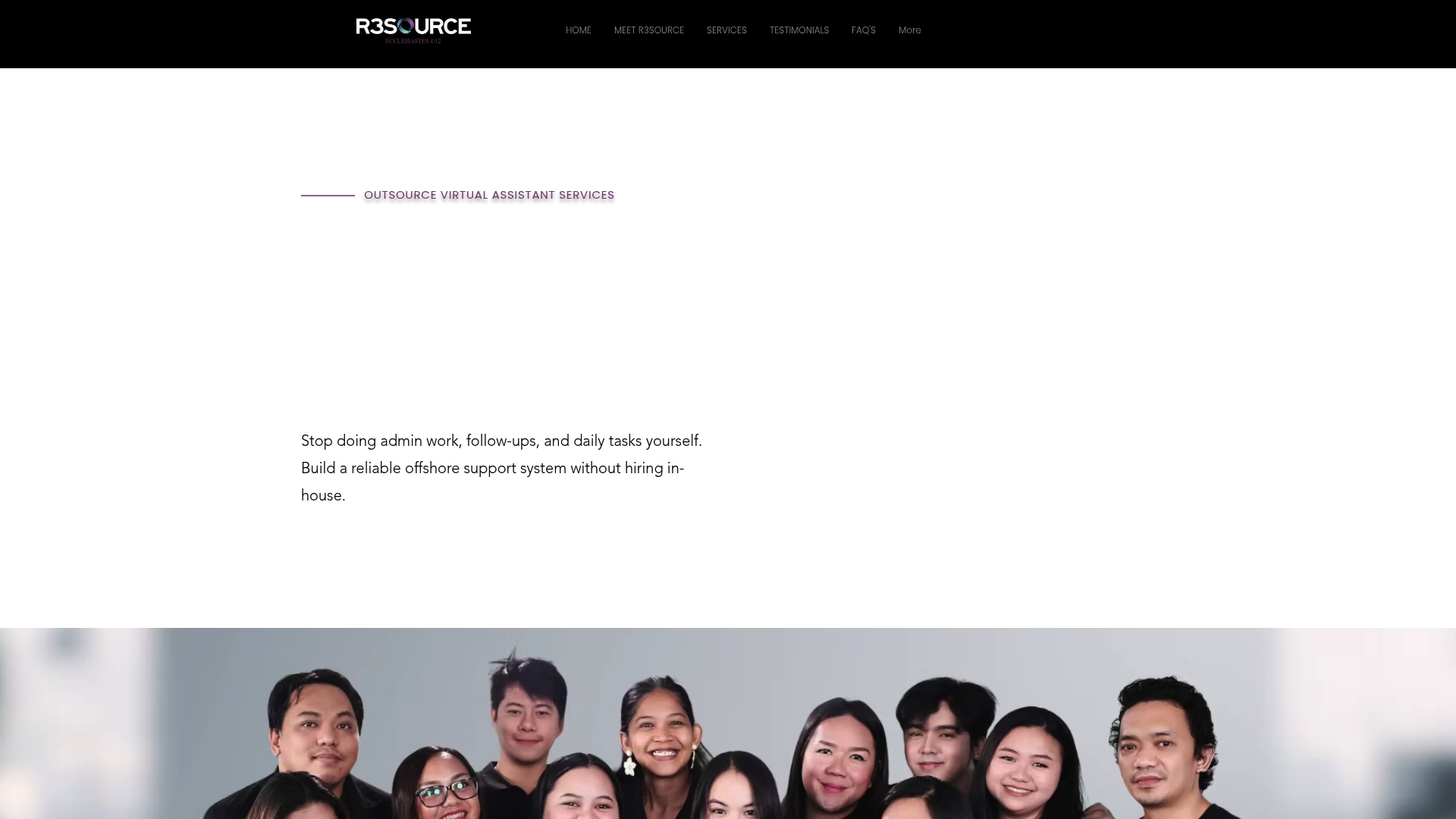
R3source provides offshore virtual assistant services built for business owners who need more than a task executor. Every R3source VA brings a combination of foundational administrative skills and specialized technical proficiencies, matched to your industry and your goals. Whether you need CRM management, marketing support, customer service, or full back-office operations, R3source delivers reliable, long-term remote professionals from the Philippines who integrate directly into your team. If you are ready to build the team that supports real growth, R3source is the partner that makes it possible.
FAQ
What are the most in-demand virtual assistant skills in 2026?
Project management tools like Asana and ClickUp, CRM platforms like HubSpot and Salesforce, and automation tools like Zapier are the most in-demand technical skills. Soft skills like self-management and proactive communication remain the top hiring priority for employers.
How much do virtual assistants earn based on their skills?
Foundational skills qualify VAs for roles paying $15–$25 per hour. Specialized VAs with automation, CRM, or industry-specific expertise command $40–$100 per hour depending on niche and experience.
What soft skills should I look for when hiring a virtual assistant?
Prioritize self-management, proactive communication, and reliability. A VA who anticipates your needs and communicates without prompting reduces your workload more than any technical skill alone.
How do I improve my virtual assistant’s skill set over time?
Share relevant training resources, assign tasks that stretch their current abilities, and schedule regular check-ins to discuss growth areas. VAs who develop alongside your business deliver compounding value over time.
What skills does a virtual assistant need for real estate or e-commerce?
Real estate VAs need CRM proficiency, transaction coordination experience, and appointment setting skills. E-commerce VAs need Shopify or WooCommerce knowledge, order management experience, and customer service capabilities.
Recommended
Comments